Every year, Brisbane’s storm season arrives with a familiar pattern. Spring brings hot, humid afternoons, and then the sky turns dark green, the wind picks up and hail rattles the roof.
For many northside homeowners, the fence is the first thing to suffer. A leaning panel in Aspley, a snapped post in Stafford, or a whole boundary run flattened in Redcliffe can leave your yard exposed, your pets at risk and your neighbours wondering who’s paying.
The good news is that most storm damage to fences is preventable. This guide covers how storms damage fences, the warning signs to look for, a simple inspection checklist, and the storm-proof fencing North Brisbane homes need to get through the season standing.
Why Spring Is the Time to Storm-Proof Your Fence in North Brisbane
South-east Queensland’s storm season generally runs from around October to March, and the most severe storms often hit in late spring and early summer. That makes spring the window for preparation, before the first big cell rolls through.
There are a few good reasons to act now:
- The weather is on your side. Mild, mostly dry spring days are ideal for inspections, repairs and new installations. Concrete footings cure well and ground conditions are easier to work with.
- Small problems are still small. A loose post is a quick fix today. After a 90km/h gust, it can become a full panel replacement.
- Installers book out fast. Once storms start, demand for repairs spikes. Booking work in spring means you aren’t waiting weeks with a gap in your fence.
- Your yard gets busier. Kids are outside more, pets are spending time in the backyard, and summer entertaining is around the corner.
Before deciding what to fix, it helps to understand exactly how storms do their damage.
How Storms, Wind and Heavy Rain Damage Backyard Fences
Fences rarely fail for just one reason. Usually, a storm finds a weakness that’s been building for months or years.
Wind Load
A solid fence acts like a sail. Strong gusts push against the panels, and that force transfers straight to the posts and footings. If posts are shallow, rotting or set in poor concrete, they lean or snap at ground level.
Saturated Soil
Heavy rain softens the ground around posts. Brisbane’s clay-heavy soils swell when wet and shrink when dry, gradually loosening footings over time. In a downpour, waterlogged soil loses its grip, and a fence that felt solid can start to lean.
Falling Trees and Branches
Overhanging branches and trees with shallow roots are a major cause of fence damage across the leafy northside suburbs. Even a moderate branch dropping from height can crush a panel.
Flying Debris
Trampolines, outdoor furniture, bins and loose building materials become projectiles in high winds. Many fences survive the wind itself but not a neighbour’s trampoline.
Water Flow and Erosion
On sloping blocks, stormwater can scour soil away from the base of the fence, undermining posts and leaving gaps underneath.
Knowing these causes makes it easier to spot the early signs of trouble.
Warning Signs Your Fence Won’t Survive Storm Season
Walk your fence line and look for these red flags:
- Leaning panels or posts, even slightly. A lean usually means the footing has moved.
- Movement when pushed. If a post wobbles when you lean on it, it’s unlikely to handle a strong gust.
- Rot at the base of timber posts. Push a screwdriver into the timber at ground level. If it sinks in easily, the post is compromised.
- Rust on Colorbond rails or posts, especially at the base, around fixings or where soil and mulch sit against the steel.
- Cracked or crumbling concrete around post footings.
- Loose, split or missing palings.
- Sagging or dragging gates, which often signal hinge post movement.
- Soil washing away from the fence base, or pooling water along the fence line.
- Branches touching or hanging over the fence.
If you spot one or two of these, it’s time for a closer look.
A Spring Fence Inspection Checklist for North Brisbane Homeowners
Set aside 30 minutes on a dry weekend and work through this list.
Structure
- Check every post for lean, wobble or rot
- Inspect concrete footings for cracks or gaps
- Look along the fence top for dips, bows or misalignment
- Test gates for sagging, dragging or loose hinges
Materials
- Check timber palings for splits, rot and loose nails
- Look for rust spots on Colorbond panels, rails and fixings
- Tighten or replace loose screws and brackets
Surroundings
- Trim branches overhanging the fence
- Move garden beds, mulch and soil away from the base of panels
- Clear leaves and debris from along the fence line
- Check drainage so water flows away from the fence, not along it
- Note any large or unstable trees nearby
Yard Safety
- Identify items that could become wind-borne, such as trampolines, furniture, pot plants and bins
- Plan where you’ll secure them when a storm warning is issued
Paperwork
- Find your fence warranty documents
- Check your home insurance policy for fence cover
- Take dated photos of your fence’s current condition
Those photos can be very useful if you need to make an insurance claim later.
Once you’ve completed the checklist, you’ll face the big question.
Repair or Replace? How to Decide Before Storm Season Hits
Not every issue means a new fence. Here’s a practical way to decide.
Repair Is Usually Right When:
- Only one or two posts are loose or damaged
- A few palings or panels need replacing
- The fence is relatively young and otherwise sound
- Gates need new hinges or latches
- Damage is isolated to one section
Replacement Makes More Sense When:
- Multiple posts are rotting or leaning
- The fence is 15 to 20 years old or more and showing widespread wear
- Rust has spread through Colorbond rails or post bases
- Repairs keep recurring in different spots
- The fence no longer suits your needs for privacy, pets or security
- You’re spending close to the cost of a new fence just keeping the old one standing
A good rule of thumb: if more than about a third of the fence needs work, replacement often delivers better value and far better storm performance.
For shared boundary fences, talk to your neighbour early. In Queensland, neighbours generally share the cost of a sufficient dividing fence, and having that conversation in spring is much easier than after a storm.
If replacement is on the table, the next step is choosing a material built for Brisbane conditions.
The Most Storm-Resistant Fencing Options for Brisbane Conditions
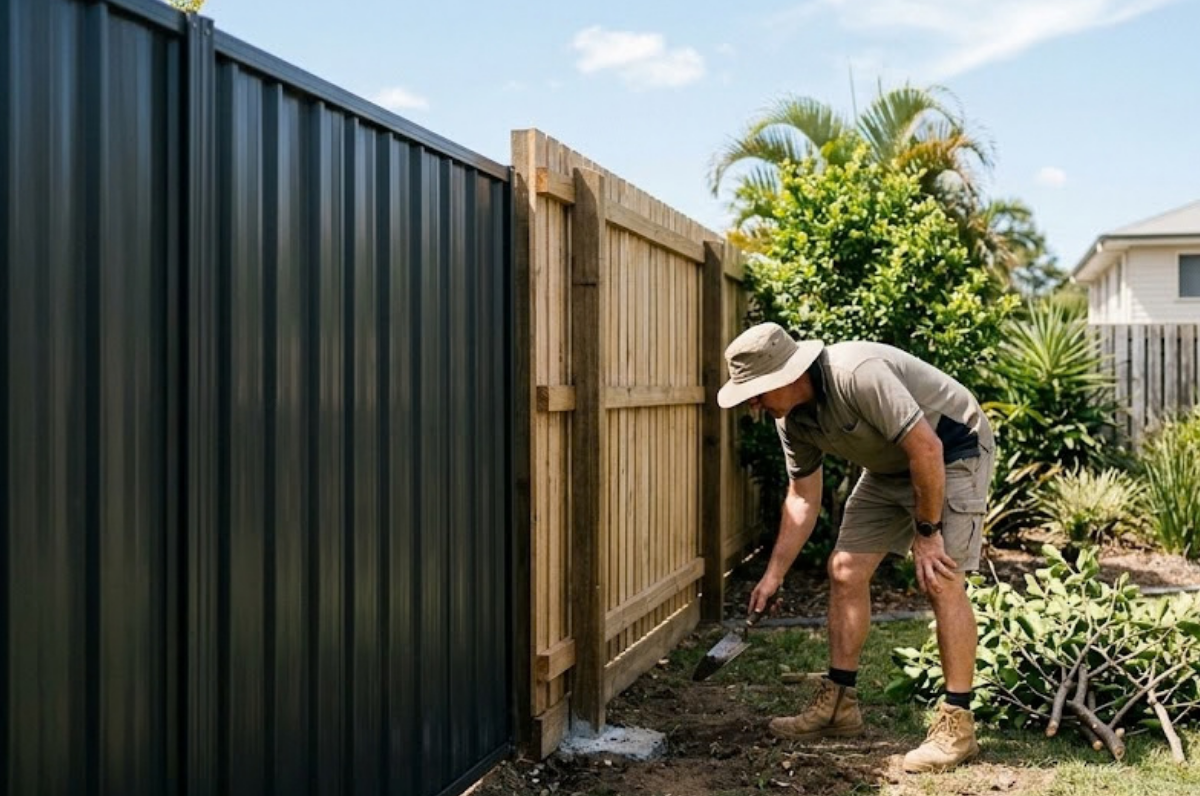
Colorbond Fencing
Colorbond is one of the most popular storm-ready options on the northside. It’s designed for Australian conditions and handles heat, humidity, heavy rain and wind well when installed correctly.
- Steel panels won’t rot, warp or split
- Low maintenance with a long service life
- Strong posts and rails hold panels firmly in place
- Comes in a wide range of colours to suit your home
The key is installation quality. Correct post spacing, footing depth and fixings are what allow a Colorbond fence to stand up to high winds.
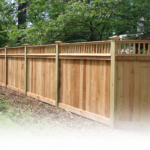
Hardwood Timber Fencing
Quality hardwood or properly treated timber can be very durable when it’s built well and maintained. For better storm performance:
- Use treated or durable timber posts, or steel posts with timber palings
- Choose a lapped and capped style for added strength
- Seal or paint regularly to resist moisture
Timber suits traditional Queenslanders and character homes beautifully, but it needs more ongoing care than steel.
Slat and Batten Fencing
Designer slat fences with small gaps between boards allow some wind to pass through, which reduces wind load on posts compared to a fully solid panel. They’re a stylish choice for front fences and feature areas.
Choosing for Your Site
Exposed sites near open parkland, elevated blocks and properties in coastal areas like Redcliffe and Deception Bay may need extra attention to wind loads. A local installer can recommend the right post size and spacing for your block.
Material matters, but what happens below ground matters just as much.
Post Footings, Drainage and Installation Details That Make a Difference
Two fences built from identical materials can perform very differently in a storm. The difference is usually in the installation.
Post Footings
- Depth: Posts should be set deep enough to resist wind and soil movement. Around 600mm is a common minimum for standard 1.8m fences, with deeper footings for taller fences, exposed sites or softer soil.
- Concrete quality: Footings should be properly mixed, compacted and given time to cure.
- Shaping: Concrete should be crowned at the top so water runs away from the post, not into it.
Drainage
- Keep soil and mulch below the bottom of panels and away from timber
- Make sure downpipes and garden runoff don’t empty against the fence line
- On sloping blocks, consider plinths, retaining or stepped panels to manage water flow
Fixings and Spacing
- Use galvanised or stainless fixings that won’t rust out
- Keep post spacing within manufacturer guidelines
- Ensure gates are hung on strong, well-supported posts
These details aren’t glamorous, but they’re often the reason one fence survives a storm while the one next door doesn’t.
Even well-built fences can be let down by a few common habits.
Common Storm Preparation Mistakes That Leave Fences Vulnerable
- Ignoring a slight lean. It rarely corrects itself and usually gets worse in the next downpour.
- Piling garden soil against the fence. This traps moisture, speeds up rot and rust, and adds pressure to panels.
- Leaving trees untrimmed. Overhanging branches are one of the leading causes of storm damage.
- Not securing outdoor items. A trampoline can do more damage to a fence than the wind itself.
- Attaching things to the fence. Shade sails, heavy planters and climbing frames add load the fence wasn’t designed for.
- Patching instead of fixing. Propping up a failing post with a timber brace may get you through a week, but not a season.
- Waiting until storms arrive. By then, installers are busy and materials can be harder to secure quickly.
- Losing the paperwork. Without warranty or insurance details on hand, claims take longer.
Even with good preparation, severe storms can still cause damage. Here’s what to do if it happens.
What to Do If Your Fence Is Damaged in a Storm
1. Put Safety First
Stay clear of fallen powerlines and treat them as live. Call Energex on 13 19 62. For urgent help with fallen trees or storm damage, contact the SES on 132 500. Watch for sharp metal edges and unstable panels.
2. Secure Kids and Pets
A damaged fence can leave your yard open. Keep children and pets inside or in a secure area until the fence is repaired or temporarily secured.
3. Document Everything
Take photos and videos of the damage from several angles before anything is moved or cleaned up. Note the date and time of the storm.
4. Contact Your Insurer
Many home building policies cover storm damage to fences, but cover varies and some policies exclude fences that weren’t well maintained. Check your policy and lodge a claim promptly.
5. Talk to Your Neighbour
If it’s a dividing fence, let your neighbour know and discuss next steps, including whether both insurers need to be involved.
6. Arrange a Temporary Fix
Temporary fencing or a simple barrier can keep pets in and maintain security while repairs are organised.
7. Call a Local Fencing Specialist
A professional can assess whether repair or replacement is needed and provide a written quote for your insurer.
Storm season doesn’t have to mean fence damage. Brisbane storms hit hardest where fences are already weak, so spring is the time to walk your fence line, work through the checklist, and fix leaning posts, rot, rust and drainage problems while they’re small.
If your fence is past its best, choosing a durable material like Colorbond or quality timber, installed with deep footings and proper drainage, will give your home the best chance of standing strong all season.
Get your fence storm-ready this spring. True Blue Fencing is a family owned North Brisbane team with licensed trades trained in-house, locally sourced Australian materials and a 10-year written warranty that transfers if you sell. Call 07 3073 2622 or request your free quote today, and let’s get your fence ready before the first storm rolls in.