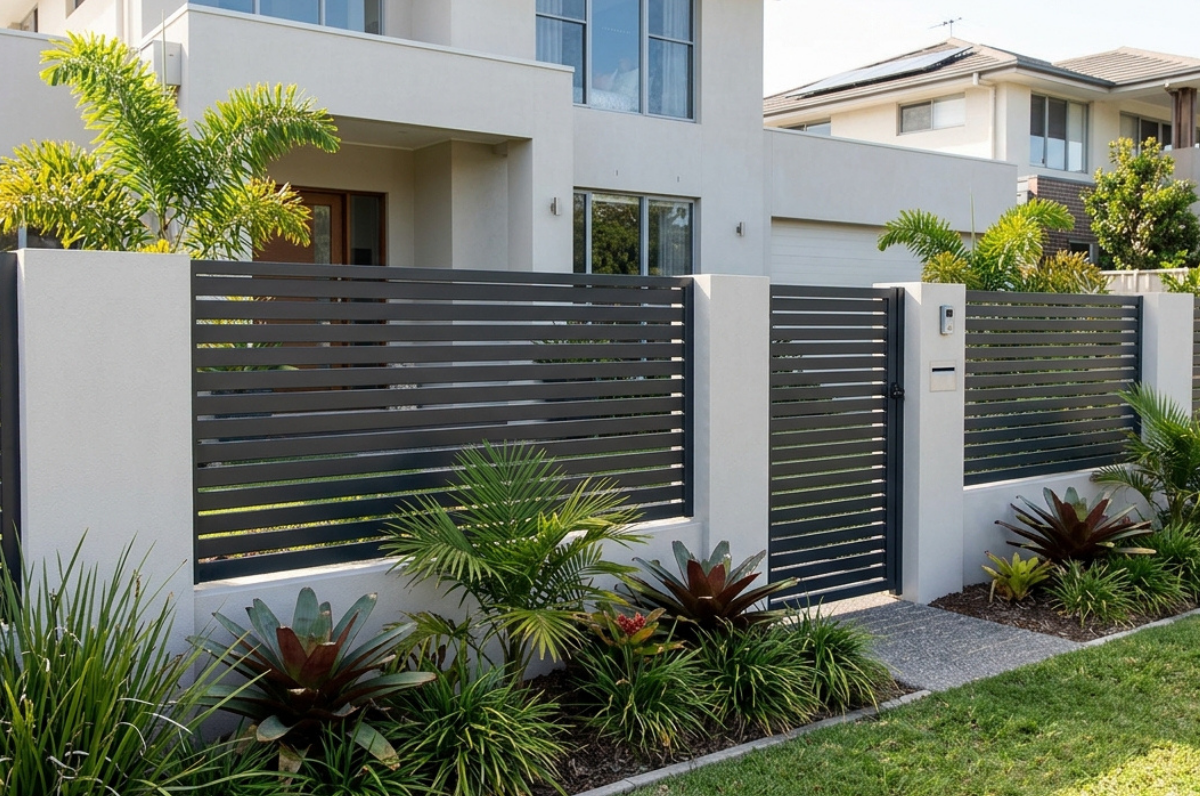
Drive through any newer street in Aspley, Bridgeman Downs or Albany Creek and you’ll see it: sleek horizontal slats, crisp aluminium screens and feature front fences that look like they were drawn by an architect.
That’s designer fencing. And it’s no longer just for luxury builds. More Brisbane homeowners are choosing custom fences to lift street appeal, create private outdoor spaces and give their homes a finished, considered look.
But what exactly is designer fencing, what does it cost, and how do you choose the right design? This guide explains everything Brisbane homeowners need to know, from styles and materials to practical tips for our climate.
What Designer Fencing Means and How It Differs From Standard Fencing
Designer fencing is any fence designed with appearance as a key priority, not just function. It’s tailored to your home’s architecture, your landscaping and the way you use your outdoor spaces.
Standard Fencing
Standard fencing is built mainly to do a job:
- Mark the boundary
- Provide privacy
- Keep pets and kids in
Think of a typical paling fence or a plain Colorbond boundary fence. Practical, reliable and cost-effective, but not designed to be a feature.
Designer Fencing
Designer fencing does all of that, plus:
- Enhances street appeal as a visible architectural feature
- Complements the home’s design, materials and colours
- Uses custom layouts, spacing, heights and finishes
- Often combines materials, such as rendered pillars with timber or aluminium infill
- Creates zones within the yard, like screened entertaining areas
In short, a standard fence surrounds your property. A designer fence becomes part of it.
Popular Designer Fencing Styles for Brisbane Homes
- Horizontal Slat Fencing
The most popular designer style in Brisbane right now. Long horizontal slats create a clean, modern line that makes frontages look wider and more contemporary. Ideal for modern homes, renovations and front fences.
- Vertical Batten Fencing
Vertical battens feel taller and more architectural. They suit modern homes and also echo the battening under traditional Queenslanders, which makes them a great bridge between old and new.
- Hit-and-Miss (Board-on-Board) Fencing
Boards are fixed on alternating sides of the rails, so the fence looks solid from straight on but lets air pass through. It offers privacy with good airflow and looks finished from both sides.
- Louvre Fencing
Angled slats let breezes through while blocking direct views. Perfect for privacy near pools, entertaining areas and side boundaries.
- Decorative and Laser-Cut Screens
Panels with laser-cut patterns, such as botanical, geometric or abstract designs, create a striking feature. They work well as entry screens, pool surrounds or garden features.
- Mixed-Material Front Fences
Rendered or masonry pillars with slat or batten infill panels create a substantial, high-end frontage. A popular choice for statement entries and new builds.
- Frameless and Semi-Frameless Glass
Most often used for pool fencing and balconies, glass keeps views open while providing a safe barrier.
Each of these styles can be built from different materials, which is where much of the design choice lies.
Materials Used in Designer Fencing: Timber, Aluminium, Composite and More
Timber
Natural timber brings warmth and texture.
- Best for: Natural, coastal, tropical and character-inspired designs
- Popular choices: Durable Australian hardwoods like spotted gum and blackbutt
- Pros: Beautiful grain, can be stained or painted, easy to customise
- Cons: Needs regular oiling, staining or painting, and will grey without care
Aluminium
Powder-coated aluminium slats are a favourite for modern homes.
- Best for: Contemporary homes, front fences, pool areas and coastal properties
- Pros: Won’t rot, rust or warp; very low maintenance; wide colour range; consistent finish
- Cons: Higher upfront cost than basic timber; colour choices are fixed once installed
Aluminium is a strong option for properties exposed to salt air, such as those around Redcliffe and the bayside.
Composite
Composite slats blend wood fibres and plastic for a timber look with less maintenance.
- Best for: Homeowners who love the timber look but not the upkeep
- Pros: No staining or sealing; resistant to rot and termites; consistent colour
- Cons: Can get hot in direct sun; quality varies between brands; needs correct spacing for expansion
Steel and Colorbond
Steel and Colorbond can be used in designer screens, slat systems and feature panels.
- Pros: Strong, durable and low maintenance, with a wide colour range
- Cons: Less natural looking than timber or composite
Masonry and Render
Brick, block and rendered pillars or plinth walls add solidity and a high-end finish, usually combined with slat or batten infill.
Glass
Glass suits pool fencing and areas where you want to keep a view. It’s sleek but needs regular cleaning.
The right material depends partly on where the fence is going.
Where Designer Fencing Works Best Around Your Property
Front Fences and Entries
The front of your home is where designer fencing makes the biggest impact. A well-designed front fence frames the house, defines the entry and creates a strong first impression.
Pool Surrounds
Glass, aluminium slats and louvres create a safe, stylish pool area. Pool fences must meet Queensland pool safety standards, so design and compliance need to go hand in hand.
Entertaining Areas and Alfresco Spaces
Feature screens and slat panels can create privacy around patios, decks and outdoor kitchens without making the space feel boxed in.
Side Boundaries and Driveways
Matching side fences and gates continue the design along the property, especially where the side is visible from the street.
Screening Utilities
Slat screens are ideal for hiding bins, air-conditioning units, water tanks and clotheslines while keeping airflow.
Garden Features
Decorative screens can create a focal point, back a garden bed or support climbing plants.
Looks are the obvious draw, but designer fencing delivers more than that.
The Benefits of Designer Fencing Beyond Good Looks
- Better street appeal and potential resale value. A considered frontage makes a strong first impression on buyers.
- Privacy without a “fortress” feel. Slats and louvres provide screening while keeping the space open and light.
- Airflow and breezes. Gapped designs let air move through, which is valuable in Brisbane’s humid summers.
- Reduced wind load. Slatted fences allow some wind to pass through, which can reduce stress on posts during storms compared with fully solid panels.
- Defined outdoor zones. Screens help create separate areas for entertaining, play and utilities.
- Low-maintenance options. Aluminium and composite designs need very little ongoing care.
- Personal expression. Your fence can reflect your style, rather than looking like every other fence in the street.
Of course, these benefits come at a price, so let’s look at cost.
How Much Does Designer Fencing Cost in Brisbane?
Designer fencing generally costs more than standard paling or plain Colorbond fencing, because it involves more materials, more detailed workmanship and often custom fabrication.
Prices vary widely, so the most reliable way to know your cost is an on-site quote. Here’s what drives the price.
Material
As a rough guide, from more affordable to more premium:
- Treated pine slats and battens
- Composite slats
- Hardwood timber slats
- Powder-coated aluminium slats
- Mixed-material fences with masonry or render
- Laser-cut screens and frameless glass
Design Complexity
- Slat spacing and the number of slats per metre
- Custom patterns, angles or mixed orientations
- Feature pillars, plinths and lighting
Site Conditions
- Fence length and height
- Sloping ground or retaining walls
- Removing and disposing of the old fence
- Access for materials and equipment
Gates
Matching pedestrian, driveway and automated gates can make up a significant part of the total cost.
Saving Without Compromising the Look
- Use designer fencing at the front and on visible sections, and standard Colorbond or timber elsewhere
- Choose standard slat sizes and spacing instead of fully custom fabrication
- Keep the design simple and well proportioned. Simple often looks best anyway.
With budget in mind, the next step is choosing a design that suits your home.
Choosing a Design That Suits Your Home’s Architecture
A designer fence should look like it belongs to the house. Here’s how to match common Brisbane home styles.
Modern and Contemporary Homes
- Horizontal aluminium or composite slats
- Charcoal, black, white or neutral tones
- Rendered pillars with slat infill
Queenslanders and Character Homes
- Vertical timber battens that echo under-house battening
- Painted finishes that match trims
- Low, open front fences that respect the streetscape
Coastal and Hamptons-Style Homes
- Painted timber or aluminium slats in white or soft greys
- Lighter, airier designs
Tropical and Resort-Style Homes
- Natural hardwood slats or timber-look composite
- Louvres and screens softened with lush planting
Brick and Post-War Homes
- Rendered or brick pillars to tie in with the house
- Timber or aluminium infill to modernise the look
Design Tips
- Pick up existing colours from your roof, window frames or trims
- Repeat materials already used on the house, such as timber cladding or render
- Follow the home’s lines. Horizontal homes suit horizontal slats; tall, vertical homes suit battens
- Keep proportions right. A front fence shouldn’t overwhelm or hide the house
Looks are only half the decision. The fence also has to work in Brisbane’s conditions.
Practical Considerations: Privacy, Slat Spacing and Brisbane Weather
Slat Spacing and Privacy
Slat spacing is one of the most important decisions in designer fencing.
| Gap between slats | Privacy level | Best for |
|---|---|---|
| Around 5mm | High | Backyards, entertaining areas, side boundaries |
| Around 10mm to 15mm | Medium | Front fences, balancing privacy and airflow |
| 20mm and wider | Low | Feature fences, open frontages, garden screens |
Wider gaps let in more light and breeze, but also more views. Consider where people will be standing and looking from, including neighbouring windows and second-storey homes.
Climbing and Safety
Horizontal slats can act like a ladder for children. If you have young kids or a pool, discuss climb-resistant designs with your installer. Pool barriers must meet strict Queensland requirements, which affect slat orientation and spacing.
Pets
Small dogs can squeeze through wider gaps. Keep spacing tight along areas pets can reach.
Brisbane Weather
- Heat and UV: Choose UV-stable finishes. Dark composites and metals can get hot in direct sun.
- Humidity and rain: Timber needs sealing, and all fences need good drainage at the base.
- Storms: Strong posts, deep footings and correct fixings are essential, especially for long slat runs.
- Salt air: Bayside properties should consider aluminium or materials rated for coastal exposure.
Council Rules
Front fence height, design and openness may be affected by character overlays and local planning rules. Check Brisbane City Council or City of Moreton Bay requirements for your property before building.
Even with careful planning, some common mistakes can let a designer fence down.
Common Designer Fencing Mistakes to Avoid
- Choosing a style that clashes with the house. An ultra-modern aluminium fence can look out of place in front of a traditional Queenslander.
- Getting slat spacing wrong. Too wide and you lose privacy; too tight and you lose airflow and light.
- Underestimating maintenance. Natural timber looks stunning but needs regular oiling or staining.
- Using cheap materials. Low-quality composite or untreated timber can warp, fade or crack quickly.
- Ignoring structural strength. Long slat runs need strong posts and correct support to stay straight.
- Forgetting the gates. Mismatched gates undo the whole look.
- Skipping council checks. Front fences in overlay areas or pool barriers that don’t comply can be costly to fix.
- Overdesigning. Too many materials, patterns and colours can look busy. Simple and well proportioned usually looks best.
Avoiding these mistakes is much easier when you understand how the process works.
How the Custom Design and Installation Process Works
At True Blue Fencing, the process is straightforward and transparent.
1. Initial Consultation
We talk about what you want: privacy, street appeal, pet safety, budget and style. Photos of designs you like are always helpful.
2. Site Assessment
We visit your property to measure, check ground levels, access, drainage and existing fences, and look at how the fence will relate to your home and landscaping.
3. Design and Material Selection
We recommend styles, materials, colours, slat spacing and heights that suit your home and Brisbane conditions, and explain the pros and cons of each option.
4. Clear Written Quote
You receive a detailed quote outlining materials, design, gates and inclusions, with no surprises.
5. Approvals and Neighbour Discussions
Where needed, we help you understand council or pool safety requirements and dividing fence considerations.
6. Preparation and Ordering
Materials are ordered, and any custom elements are prepared ahead of installation.
7. Professional Installation
Our licensed trades, trained in-house, install your fence with strong footings, accurate alignment and quality fixings. We don’t subcontract.
8. Clean-Up and Handover
We leave your site spotless and walk you through the finished fence.
9. Warranty and Aftercare
Your fence is backed by a 10-year written warranty that transfers with the property if you sell, and we’ll be back within 48 hours if anything needs fixing.
Frequently Asked Questions
What is the difference between designer fencing and normal fencing?
Standard fencing focuses on function, such as privacy and marking boundaries. Designer fencing adds style, using custom layouts, materials, colours and finishes to complement your home’s architecture.
Is designer fencing more expensive?
Generally, yes. It usually involves more materials, detailed workmanship and custom elements. Using designer fencing on the front and visible areas, and standard fencing elsewhere, is a popular way to manage cost.
What is the best material for designer fencing in Brisbane?
It depends on your home and priorities. Aluminium is low maintenance and suits coastal areas, timber offers natural warmth, and composite gives a timber look with less upkeep.
Do slat fences provide enough privacy?
Yes, if the spacing is right. Gaps of around 5mm give high privacy, while wider gaps create a more open feature fence. Your installer can recommend spacing for each area.
Do I need council approval for a designer front fence in Brisbane?
It depends on your property. Fence height, character overlays and pool barriers can all trigger requirements. Check with Brisbane City Council or City of Moreton Bay, or ask your installer.
How long does designer fencing last?
With quality materials and professional installation, designer fencing can last many years. Aluminium and composite need little maintenance, while timber lasts longest with regular oiling or staining.
Final Thoughts
Designer fencing turns a functional boundary into a feature of your home. From horizontal slats and vertical battens to louvres, laser-cut screens and mixed-material frontages, there’s a style to suit every Brisbane home.
The best results come from choosing materials that suit your climate and lifestyle, a design that matches your home’s architecture, the right slat spacing for privacy and airflow, and an installer who gets the structural details right.
Ready to create a fence that does more than divide space? True Blue Fencing is a family owned North Brisbane team with licensed trades trained in-house, locally sourced Australian materials and a 10-year written warranty that transfers if you sell. Call 07 3073 2622 or request your free quote today, and let’s design a fence that suits your home.