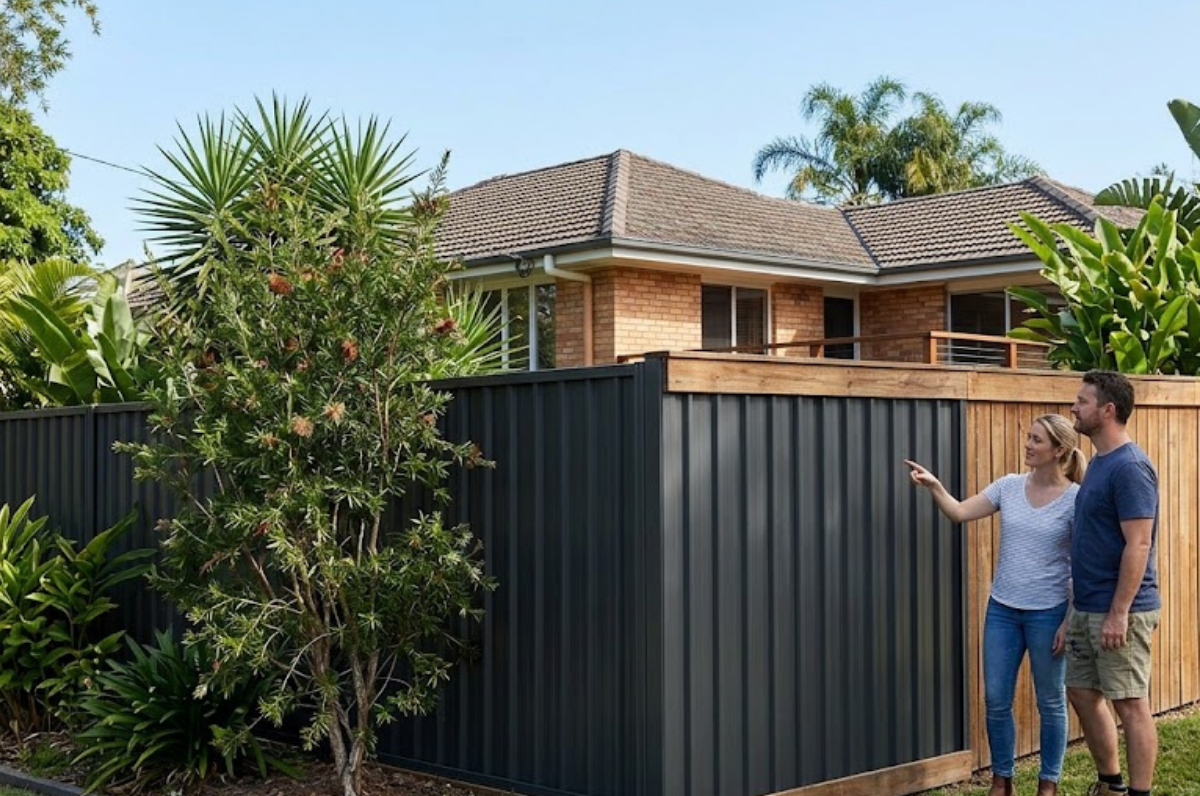
It’s the question we hear more than any other on the northside: should I go Colorbond or timber?
Both are excellent fencing materials, and both are everywhere across Chermside, Aspley, Everton Park, Albany Creek and Redcliffe. But they suit different homes, budgets and lifestyles. The right choice for a new build in Bridgeman Downs might be the wrong one for a 1920s Queenslander in Kedron.
This guide breaks down Colorbond vs timber fencing North Brisbane homeowners can actually use, comparing cost, durability, maintenance, privacy, style and long-term value so you can choose with confidence.
Colorbond vs Timber at a Glance: How the Two Compare
Here’s a quick side-by-side before we dig into the detail.
| Factor | Colorbond | Timber |
|---|---|---|
| Upfront cost | Mid-range | Low to high, depending on timber and style |
| Lifespan | Long, with minimal care | Long if well maintained |
| Maintenance | Very low | Moderate (painting, staining, repairs) |
| Termites and rot | Not affected | Can be affected |
| Privacy | Excellent (solid panels) | Excellent with lapped and capped palings |
| Style | Clean, modern | Natural, traditional, versatile |
| Colour options | Wide factory range | Unlimited paint and stain choices |
| Repairs | Panel replacement | Easy to repair piece by piece |
| Best suited to | Modern homes, low-maintenance yards | Character homes, natural landscapes |
Neither material wins every category. The best choice depends on what matters most to you, starting with budget.
Upfront Cost Comparison for North Brisbane Properties
Cost is often the deciding factor, but the cheapest option on day one isn’t always the cheapest over time.
Timber Costs
Timber has the widest price range of any fencing material:
- Treated pine paling fences are usually the most budget-friendly option for boundary fencing.
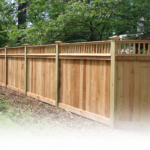
- Lapped and capped timber fences cost more because they use extra palings and a capping rail, but deliver better privacy and durability.
- Hardwood fences such as spotted gum or ironbark sit at the premium end.
- Picket and designer timber fences vary widely depending on detailing.
Colorbond Costs
Colorbond generally sits in the mid-range. A standard 1.8m Colorbond boundary fence is often comparable in price to a quality lapped and capped timber fence, and can be cheaper than hardwood.
What Affects the Price on Your Property
Whichever material you choose, these factors have the biggest impact on your quote:
- Fence length and height
- Removal and disposal of the old fence
- Sloping or uneven ground needing stepped panels or plinths
- Retaining walls and difficult access
- Number and style of gates
- Rocky ground or tree roots affecting post holes
Shared Costs With Neighbours
For dividing fences in Queensland, neighbours generally share the cost of a sufficient fence. Agree on the material and colour together early, as it can affect which option makes the most sense.
Upfront cost is only half the story. How each material handles Brisbane weather matters just as much.
Durability in Brisbane’s Heat, Humidity and Storm Season
Brisbane is tough on fences. Summer heat, high humidity, heavy rain, strong UV and storm season all take their toll.
Colorbond Durability
- No rot, warping or splitting. Steel isn’t affected by moisture the way timber is.
- Termite-proof. A big advantage in Brisbane, where termites are common.
- UV-resistant finish that holds its colour well over time.
- Strong in storms when posts and footings are installed correctly.
- Non-combustible, which some homeowners value near bushland.
Things to watch:
- Rust can develop where soil, mulch or garden beds sit against the panels.
- Coastal properties in areas like Redcliffe and Deception Bay may need products suited to salt exposure. Ask your installer about coastal-rated options.
- Dark colours absorb more heat in summer.
Timber Durability
- Hardwoods are naturally strong and resistant when well chosen.
- Treated pine resists rot and termites when it’s treated to the right level for its use.
- Flexible in wind, and individual damaged palings are easy to replace.
Things to watch:
- Moisture, humidity and soil contact can lead to rot, especially at post bases.
- Termites can attack untreated or poorly treated timber.
- Sun and rain cause greying, cupping and splitting if the timber isn’t sealed.
Storm Performance
For both materials, storm resistance depends mostly on the installation. Deep footings, correct post spacing and quality fixings matter more than whether the panel is steel or timber.
Durability is closely linked to the next factor: how much work each fence needs over the years.
Maintenance Over the Life of Your Fence
Colorbond Maintenance
Colorbond is about as low maintenance as fencing gets:
- Wash down occasionally with water to remove dirt and salt, especially in coastal areas
- Keep soil, mulch and garden beds away from the base
- Check fixings and gates once a year
- No painting or sealing needed
Timber Maintenance
Timber needs more ongoing care, but rewards it:
- Paint or stain every few years, depending on sun exposure and product quality
- Inspect yearly for rot, loose palings, popped nails and termite activity
- Replace damaged palings as needed
- Keep garden beds and soil clear of the timber
The Long-Term Picture
If you want a “set and forget” fence, Colorbond is hard to beat. If you enjoy a weekend project or want the flexibility to change colours over time, timber’s maintenance needs may feel like part of the appeal rather than a chore.
Maintenance aside, most families also want their fence to keep the backyard private, secure and peaceful.
Privacy, Security and Noise Reduction Compared
Privacy
- Colorbond: Solid steel panels leave no gaps. Full privacy from day one.
- Timber: Lapped and capped palings provide equivalent privacy. Standard paling fences can develop small gaps as timber shrinks.
Security
- Colorbond: Hard to climb thanks to its smooth surface, and impossible to see through.
- Timber: Strong and secure, though rails can give a foothold if they face outward. Planning the rail position helps.
Kids and Pets
Both materials work well. Colorbond is ideal for climbing kids and chewing dogs, while timber suits calmer pets and families who prefer a natural look.
Noise Reduction
A solid, well-built fence can reduce some street and neighbour noise.
- Colorbond blocks a fair amount of sound but can sometimes rattle in strong wind if not installed tightly.
- Lapped and capped timber offers good noise reduction, and the denser and thicker the timber, the better.
Neither will soundproof a yard on a busy road like Gympie Road, but both can noticeably soften the noise.
Function covered, let’s talk about looks.
Which Material Suits Your Home’s Style and Street Appeal?
Your fence should complement your home, not compete with it.
Colorbond Suits
- Modern and contemporary homes
- New estates and recently built homes across the northside
- Homes with Colorbond roofs, where colours can be matched
- Clean, minimalist landscaping
Colorbond comes in a wide range of factory colours, from soft neutrals to deep charcoals. Matching your roof or trim gives a cohesive, architect-designed feel.
Timber Suits
- Queenslanders, workers’ cottages and character homes
- Post-war homes and leafy established suburbs
- Natural, tropical or cottage-style gardens
- Homes with timber decks, verandahs or screens
Timber can be painted any colour or stained to show off the grain, giving you complete design flexibility.
Mixing Both
Many North Brisbane homes use both materials. For example:
- Timber pickets or battens at the front for street appeal
- Colorbond along the side and rear boundaries for privacy and low maintenance
This approach balances style and practicality.
So when does each option come out on top?
When Colorbond Is the Better Choice
Colorbond is usually the stronger option if you:
- Want minimal ongoing maintenance
- Live in a modern or newer home
- Are worried about termites or rot
- Have dogs that chew, climb or dig at the base
- Need full privacy from a busy street or close neighbours
- Want a fence that holds its colour with little effort
- Own a rental property and want to reduce upkeep
- Want a durable boundary fence that suits most neighbours’ tastes
Example: A family in a newer Albany Creek home wants a private, low-maintenance backyard for two energetic dogs. A 1.8m Colorbond fence in a colour matching their roof is the ideal fit.
When Timber Is the Better Choice
Timber is usually the better option if you:
- Own a Queenslander or character home
- Live in a character or heritage overlay area where traditional styles are preferred
- Want a natural look that blends into a leafy garden
- Like the flexibility to repaint or restain in future
- Need an affordable entry-level boundary fence
- Want a picket front fence with traditional street appeal
- Prefer being able to repair the fence one paling at a time
Example: A Queenslander in Kedron needs a new front fence. A white timber picket fence with a matching gate suits the home’s character and keeps the streetscape traditional.
Whichever material you choose, the long-term value depends heavily on warranty and workmanship.
Warranty and Long-Term Value: What Each Option Offers
Product Warranties
Both materials may come with manufacturer warranties, but the terms differ. Colorbond products are generally backed by manufacturer warranties covering the steel and its finish. Timber warranties vary depending on the species, treatment and supplier. Always ask what’s covered and for how long.
Workmanship Warranty
A product warranty only protects the materials. If posts are set too shallow or panels are poorly fixed, it’s the installer’s workmanship warranty that matters.
At True Blue Fencing, every installation comes with:
- A 10-year written warranty for added peace of mind
- Transferable warranty certificates that stay with the property if you sell
- A return within 48 hours if anything needs fixing
Long-Term Value
When weighing value, consider:
- Lifespan: How long will the fence last with realistic maintenance?
- Maintenance costs: Painting, staining and repairs add up over time for timber.
- Resale appeal: A well-built fence that suits the home adds to street appeal.
- Installation quality: A well-installed fence of either material will outperform a poorly built one.
In simple terms, Colorbond often wins on low running costs, while timber wins on character, flexibility and entry-level price.
There’s no single winner in the Colorbond vs timber debate. Colorbond offers low maintenance, termite resistance and excellent privacy, making it ideal for modern homes and busy families. Timber offers natural beauty, design flexibility and a perfect match for Queenslanders and character homes.
The best fence for your North Brisbane property depends on your home’s style, your budget, your pets and family, and how much maintenance you’re happy to do. And whichever you choose, quality installation and a solid written warranty are what protect your investment.
Still not sure which is right for you? True Blue Fencing is a family owned North Brisbane team with licensed trades trained in-house, locally sourced Australian materials and a 10-year written warranty that transfers if you sell. Call 07 3073 2622 for practical advice or request your free quote today.