Spring in Brisbane is when the backyard comes back to life. The jacarandas bloom, the kids and dogs spend more time outside, and weekends start revolving around the barbecue.
It’s also the perfect time to give your fence some attention. A few hours of care now can add years to its life, prevent costly repairs, and make sure it’s ready for the summer sun and storm season ahead.
This guide walks you through a practical spring fence maintenance Brisbane checklist, covering inspections, cleaning, sealing, gates and the warning signs that mean it’s time to call in a professional.
Why Spring Is the Ideal Time for Fence Maintenance in Brisbane
Spring gives you a short window of ideal conditions before summer arrives.
- Mild, mostly dry weather. Paints, stains and sealers apply and cure best in moderate temperatures, without the heat and afternoon storms of summer.
- Winter wear is easy to spot. Cooler, damp months can loosen posts, encourage mould and highlight areas where water pools.
- Summer UV is coming. Brisbane’s summer sun is harsh on timber and finishes. Protecting your fence now helps prevent fading, cracking and greying.
- Storm season is close. South-east Queensland’s storm season generally runs from around October to March. Weak posts and loose panels are far easier to fix before the first big storm.
- Your yard is in use. With kids and pets outside more, gates and fences need to be safe and secure.
Grab a notepad, a screwdriver and your phone for photos, and let’s start at the foundation.
Inspect Posts, Footings and Rails for Winter Wear
Posts and footings carry the entire fence. If they fail, everything else follows.
What to Check
- Lean: Stand at one end and look along the fence line. Any dips, bows or leaning sections usually mean a post has moved.
- Wobble: Push firmly on each post. Movement suggests a loose or failing footing.
- Footings: Look for cracked, crumbling or lifted concrete around the base of posts.
- Soil movement: Brisbane’s clay soils shrink and swell with moisture. Check for gaps between the soil and the footing.
- Rails: Look for sagging, cracked or split rails, and rails pulling away from posts.
- Fixings: Check that brackets, screws and nails are tight and intact.
Quick Fixes You Can Do
- Tighten loose screws and brackets
- Refill small gaps around the base with soil and compact it
- Reshape soil so water drains away from posts
If posts are leaning, wobbly or cracked at ground level, that’s a job for a professional before storms arrive.
Check for Termites, Rot and Moisture Damage in Timber Fences
Brisbane’s warm, humid climate makes termites and rot a real risk for timber fences, and termite activity tends to increase as the weather warms up.
Signs of Termites
- Mud tunnels running up posts or along the base of the fence
- Hollow-sounding timber when tapped
- Soft or crumbling timber that breaks away easily
- Damage that runs along the grain inside the timber
If you find termites, don’t disturb them or spray them yourself. Disturbing them can drive them to move elsewhere, possibly towards your home. Contact a licensed pest controller first, then repair the fence once the activity is treated.
Signs of Rot and Moisture Damage
- Soft timber at the base of posts. Press a screwdriver into the timber at ground level. If it sinks in easily, the post is compromised.
- Dark staining, mould or mildew
- Splitting, cupping or warping palings
- Fungal growth where timber stays damp
Prevention Tips
- Keep soil, mulch and garden beds clear of timber
- Fix sprinklers and downpipes that wet the fence regularly
- Make sure palings sit slightly above ground level
Once you’ve checked the structure, it’s time to clean.
Clean Your Fence the Right Way for Its Material
Cleaning removes dirt, mould and salt that can shorten your fence’s life. But each material needs a different approach.
Timber
- Use a soft brush with water and a mild timber cleaner or gentle detergent
- Use a garden hose or a pressure washer on a low setting only, held well back
- High pressure can damage timber fibres, raise the grain and strip coatings
- Let the timber dry thoroughly before sealing or painting
Colorbond
- Hose down with clean water
- For stubborn dirt, use a soft cloth or brush with warm water and a mild detergent
- Avoid abrasive cleaners, scourers, steel wool and harsh solvents, which can damage the finish
- Rinse well to remove any residue
- Wash more often if you live near the coast, such as around Redcliffe or Deception Bay, to remove salt build-up
Steel
- Wash with mild soapy water and a soft cloth or brush
- Rinse and dry, paying attention to joints and welds where dirt and moisture collect
- Avoid abrasives that can scratch the powder coat
Glass
- Clean with water and a gentle glass cleaner or a vinegar and water mix
- Use a soft cloth or squeegee to avoid streaks
- Wipe down spigots and hardware, especially around pools where chlorine and salt can build up
With a clean surface, timber fences are ready for protection.
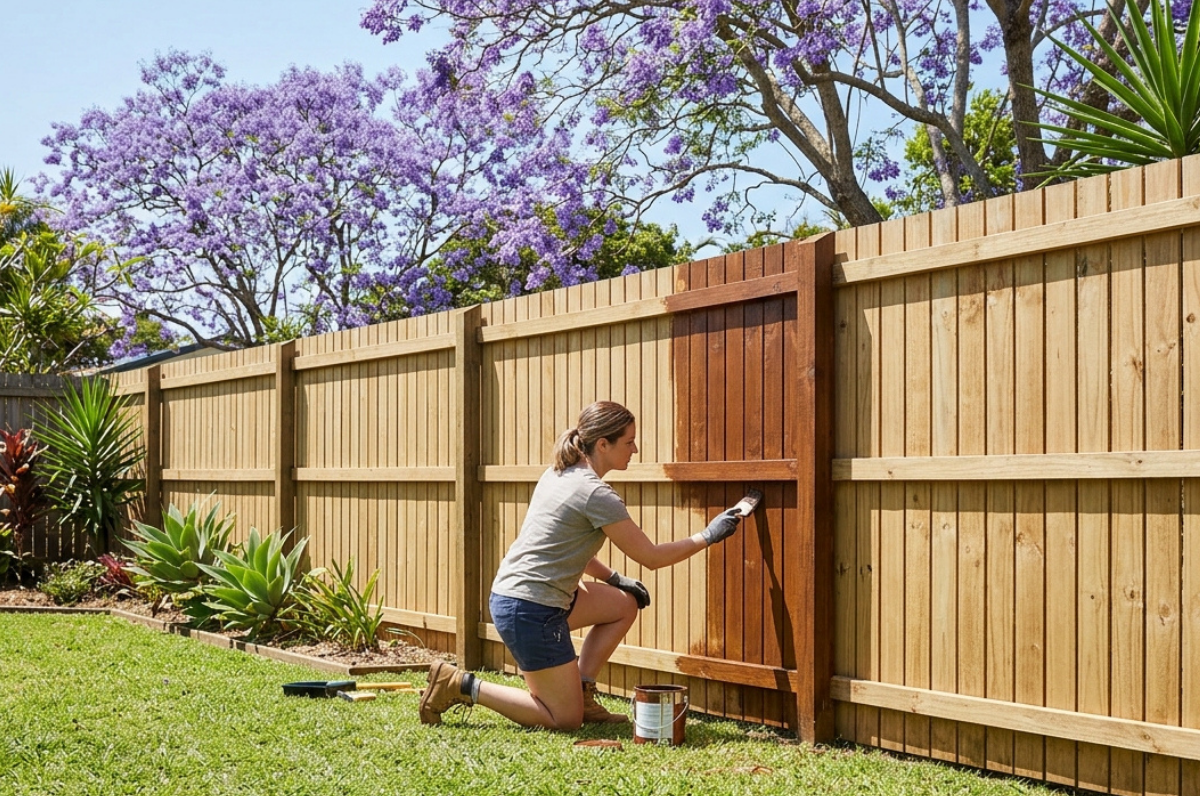
Re-Stain, Seal or Paint Timber Before Summer Sun Hits
A good coating is your timber fence’s best defence against UV, rain and moisture.
How to Tell If It’s Time
- The timber looks grey, dry or faded
- Water soaks in instead of beading on the surface
- Paint is peeling, flaking or cracking
- You can see bare timber in patches
Step-by-Step
- Clean and dry the fence as described above.
- Repair first. Replace damaged palings and fix loose nails or screws before coating.
- Sand rough areas and remove loose or flaking paint.
- Choose the right product. Use an exterior-grade paint, stain or oil designed for Australian conditions and UV.
- Pick the right day. Aim for a dry, mild day with no rain forecast. Avoid painting in direct midday sun, which can cause coatings to dry too quickly.
- Apply evenly with a brush, roller or sprayer, following the product’s instructions.
- Seal cut ends and the tops of palings and posts, where water tends to get in.
- Allow proper drying time before the next coat.
How Often?
Painted fences typically need recoating every few years, depending on sun exposure and product quality. Stained and oiled fences may need more frequent attention, especially on sun-facing sides.
Metal fences need a different kind of attention.
Look for Rust, Scratches and Loose Fixings on Colorbond and Steel
Colorbond and steel fences are low maintenance, not no maintenance. A quick spring check keeps small issues from becoming big ones.
What to Look For
- Rust spots, especially at the base of panels, around fixings and along cut edges
- Scratches and chips in the coating from mowers, whipper snippers or bikes
- Loose or missing screws and rivets
- Dents or bent panels from impacts or storms
- Soil, mulch or garden beds sitting against the base, which trap moisture
What to Do
- Touch up small scratches with a matching touch-up paint recommended for your fence’s finish
- Replace corroded fixings with ones suited to your fence material
- Pull soil and mulch away from the base of panels
- Be careful with garden tools. Line trimmers are one of the most common causes of coating damage
If rust has spread through rails or post bases, or panels are badly damaged, it’s time for professional advice.
Test Gates, Hinges and Latches for Safe Operation
Gates get more use than any other part of the fence, and they’re usually the first thing to fail.
Check Every Gate
- Swing: Does it open and close smoothly without dragging on the ground?
- Sag: Is the gate drooping, or out of line with the latch?
- Hinges: Are they tight, rust-free and working smoothly?
- Latch: Does it engage securely every time?
- Self-closing gates: Does the gate close and latch on its own from any open position?
- Locks: Do padlocks and keyed locks still work properly?
Simple Fixes
- Tighten hinge and latch screws
- Lubricate hinges and latches with a suitable lubricant
- Adjust self-closing hinges if the gate isn’t closing fully
- Replace worn or rusted hardware
Pool Gates
Pool gates must be self-closing and self-latching under Queensland pool safety rules. Test them regularly, and get any fault fixed straight away. A pool gate that doesn’t latch is a serious safety risk for children.
Once the gates are working, turn your attention to the area around your fence.
Trim Plants and Clear Debris Along the Fence Line
Spring growth is fast in Brisbane. Without attention, plants can quickly cause damage.
What to Do
- Trim overhanging branches that could fall onto the fence in a storm
- Remove vines and creepers growing on or through the fence. They trap moisture and add weight
- Cut back shrubs and hedges so air can circulate around the fence
- Clear leaves, mulch and debris piled against the base
- Watch for tree roots that may lift footings or push against posts
Pool Fence Reminder
Queensland pool fences need a clear non-climbable zone. Spring growth, garden furniture or pot plants can easily creep into this space. Check that nothing near the fence could help a child climb over.
Secure Loose Items
While you’re working along the fence, look for items that could become projectiles in a storm, such as trampolines, furniture and bins, and plan where to secure them.
Some problems go beyond a weekend job, though.
Signs Your Fence Needs Professional Repair or Replacement
DIY care handles most spring maintenance, but some issues need expert attention.
Call a Professional If You Notice:
- Several posts leaning, wobbling or rotting at the base
- Cracked or failed concrete footings
- Termite damage, once the termites have been treated
- Rust spreading through Colorbond rails, posts or steel frames
- Large sections of loose, split or missing palings
- Gates that keep sagging even after adjustments
- Pool fences or gates that may not meet safety standards
- Storm or impact damage to panels
Repair or Replace?
- Repair usually makes sense when damage is limited to a few posts, panels or palings and the fence is otherwise sound.
- Replace is often better value when the fence is old, damage is widespread, or repairs keep recurring.
As a rough rule, if more than about a third of the fence needs work, replacement is often the smarter investment.
Frequently Asked Questions
How often should I maintain my fence in Brisbane?
A full inspection and clean once a year in spring is a good routine, with a quick check after major storms. Timber fences also need repainting or restaining every few years.
Can I pressure wash my fence?
You can use a pressure washer on a low setting, held well back from the surface. High pressure can damage timber and strip coatings on Colorbond and steel. A soft brush and mild detergent is often safer.
When is the best time to paint or stain a timber fence in Brisbane?
Spring and autumn are ideal. Choose a dry, mild day with no rain forecast, and avoid painting in direct midday sun.
How do I know if my fence has termites?
Look for mud tunnels, hollow-sounding timber and soft or crumbling posts. If you suspect termites, call a licensed pest controller before disturbing them.
How do I stop my Colorbond fence from rusting?
Keep soil, mulch and garden beds away from the base, wash the fence regularly, especially near the coast, touch up scratches promptly, and be careful with line trimmers.
How do I fix a sagging gate?
Start by tightening hinge screws and checking the hinge post for movement. If the post is leaning or the gate frame has warped, a professional repair or replacement may be needed.
Final Thoughts
A little spring maintenance goes a long way. Inspect posts and footings, check timber for termites and rot, clean your fence correctly for its material, recoat timber before summer, check Colorbond and steel for rust and loose fixings, test every gate, and keep plants and debris clear of the fence line.
Do these things now and your fence will be safer, stronger and better prepared for Brisbane’s summer sun and storm season.
Found something that needs more than a weekend fix? True Blue Fencing is a family owned North Brisbane team with licensed trades trained in-house, locally sourced Australian materials and a 10-year written warranty that transfers if you sell. Call 07 3073 2622 or request your free quote today, and we’ll help you get your fence back in top shape.