There’s something special about a Queenslander. The wide verandahs, VJ walls, timber battens and high-set charm are part of what makes suburbs like Kedron, Nundah, Wavell Heights and Stafford so loved.
But even the most beautiful character home can look unfinished behind the wrong fence. A stark modern panel or a mismatched front fence can work against everything that makes the house special.
This guide covers timber fencing for Queenslanders: which styles suit classic homes, which timbers handle Brisbane’s climate, which colours work, and the overlay rules worth checking before you build. It also covers how to keep your fence looking good for years.
Why Timber Fencing Complements a Traditional Queenslander
Queenslanders were built from timber, so a timber fence naturally belongs with them. It continues the materials, textures and craftsmanship of the house right out to the boundary.
Timber fencing suits these homes because:
- It matches the architecture. Battens, palings and pickets echo the verandah balustrades, lattice and VJ boards.
- It can be painted to match. Your fence can pick up the trim, body or roof colours of the house.
- It feels open and welcoming. Low picket fences frame the front garden without hiding the house.
- It’s versatile. The same material can create a low decorative front fence and a full-height private backyard fence.
- It adds to street appeal and value. A sympathetic fence makes a character home look complete, which buyers notice.
Timber is also easy to repair, adjust and repaint over time, which suits the way older homes evolve.
So which timber styles work best? Let’s look at the classics.
Classic Timber Fence Styles for Character Homes
Lapped and Capped Paling Fences
The traditional Brisbane backyard fence. Overlapping palings provide full privacy, and a timber capping rail along the top gives a neat finish and helps protect the paling tops from weather.
This is ideal for side and rear boundaries on character homes.
Picket Fences
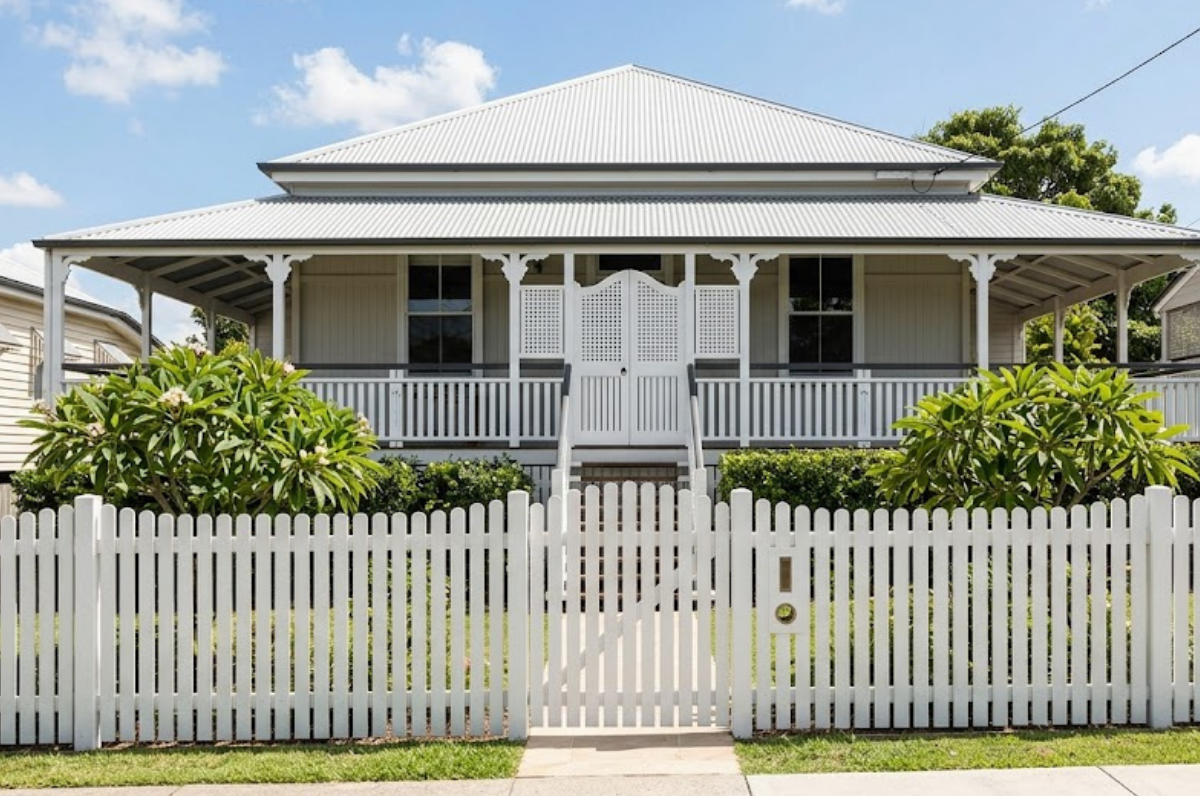
The classic Queenslander front fence. Pickets are spaced to keep the yard open and friendly while still marking the boundary. More on picket ideas below.
Batten and Slat Fencing
Vertical timber battens closely echo the battening often used to enclose the underneath of high-set Queenslanders. A batten fence can tie the fence and house together beautifully, especially when painted in the same colour.
Paling Fences With Lattice Toppers
A paling fence topped with a band of timber lattice adds height and softness. It nods to the lattice often found on Queenslander verandahs and under-house screening, and it’s a great base for climbing plants.
Good Neighbour (Double-Sided) Fences
Palings fixed on alternating sides of the rails give both neighbours a finished face. It’s a considerate choice for dividing fences and has a slightly more crafted look.
Post and Rail With Infill
Exposed timber posts with decorative tops, framing picket or batten infill panels, create a more formal, substantial frontage. This suits grander character homes.
The front fence is where style matters most, so let’s look more closely at pickets.
Picket Fencing Ideas for Queenslander Street Frontages
A picket fence is often the first thing people see, so it sets the tone for the whole property.
Picket Top Styles
- Pointed or spear tops for a classic, crisp look
- Rounded tops for a softer cottage feel
- Gothic or arrowhead tops for added decorative detail
- Square or flat tops for a cleaner, simpler finish on more modest homes
Height
Traditional front picket fences usually sit between about 900mm and 1.2m. This keeps the house visible from the street, which is part of the character streetscape, while still defining the garden and helping contain pets and small children.
Spacing and Rhythm
Even spacing gives a picket fence its charm. Closer spacing offers a little more privacy and keeps small dogs in. Wider spacing feels more open and traditional.
Matching Gates
A matching pedestrian gate, perhaps with a gentle arched or scalloped top line, creates a focal point. Line it up with your front stairs or garden path for a balanced, welcoming entry.
Posts and Details
Feature posts with simple caps or finials add a finished, period-appropriate touch. Small details like these make a big difference.
Planting
Pair pickets with traditional cottage planting, such as gardenias, murraya, frangipanis or climbing roses, for an authentic look.
Of course, a beautiful fence only lasts if the timber is right for Brisbane’s conditions.
Choosing the Right Timber for Brisbane’s Climate
Brisbane’s heat, humidity, heavy summer rain and termites are tough on timber. Choosing the right species and treatment makes a big difference to how long your fence lasts.
Hardwoods
Australian hardwoods are naturally dense, strong and durable.
- Spotted gum: Strong and attractive, with good durability. Popular for posts and feature fencing.
- Ironbark: Extremely hard and durable, ideal for posts and high-traffic areas.
- Blackbutt: Good durability and a lighter colour that takes stain well.
Hardwoods are excellent for posts, rails and feature elements, and suit stained or natural finishes.
Treated Pine
Treated pine is cost-effective, straight and takes paint well, which makes it a popular choice for painted picket fences.
- Use timber treated to the correct level for its use. In-ground posts need a higher treatment level than above-ground palings and pickets.
- Seal cut ends to protect them from moisture.
Key Tips for Brisbane Conditions
- Choose durable posts. Posts are where fences fail first. Use quality hardwood or appropriately treated timber, or consider galvanised steel posts hidden behind timber.
- Keep timber off the ground. A small gap or a plinth between palings and soil reduces rot and termite risk.
- Use galvanised or stainless fixings so nails and screws don’t rust and stain the timber.
- Source locally. Australian timbers suited to Queensland conditions tend to perform better than imported alternatives.
Once you’ve chosen your timber, the next decision is colour.
Paint and Stain Colours That Suit Heritage-Style Homes
Colour is where a timber fence really connects with a Queenslander. A good scheme makes the house and fence look like they were always meant to be together.
Classic Painted Palettes
- White or warm cream: The timeless choice for picket fences, crisp and welcoming against green gardens.
- Heritage greens: Deep bottle or Brunswick-style greens, often used on trims and lattice of older homes.
- Heritage reds: Deep Indian red or burgundy tones, a classic period trim colour.
- Soft heritage greys and stone tones: A gentle, modern take that still respects the period feel.
Matching the House
A simple approach that works well:
- Paint the fence to match the house trims for a cohesive look
- Paint the fence to match the body colour and pick out post caps or gates in the trim colour for a subtle accent
Stained and Natural Finishes
Stained hardwood suits renovated Queenslanders and backyard fences. Warm, honey or mid-brown tones complement timber decks and verandah floors.
Tips
- Look at manufacturers’ heritage colour ranges, which are designed for period homes
- Test colours on a sample board outdoors and view them at different times of day
- Use exterior-grade paints and stains made for Queensland’s UV and humidity
Looks matter, but so does how the fence works for your family.
Balancing Period Character With Modern Privacy and Security
Many character home owners want the charm of a low picket fence and the privacy and security of a modern yard. The good news is that you can have both.
Use Different Fences for Different Zones
- Front: A low, open picket fence keeps the streetscape traditional
- Side and rear: Full-height lapped and capped palings give privacy where you actually spend time
Add Height Gently
- Lattice or slat toppers add privacy without the heavy look of a solid wall
- Stepped heights can transition from a low front fence to a taller side fence
Hide Modern Strength Inside Traditional Looks
- Galvanised steel posts can sit behind timber cladding for added strength
- Concealed self-closing hinges and latches keep gates secure without visible hardware clutter
Keep Kids and Pets In
- Choose closer picket spacing or add discreet mesh behind pickets for small dogs
- Fit a self-closing, self-latching front gate
- Keep rails on the inside smooth or positioned to avoid easy climbing
Use Planting for Privacy
Hedges like murraya or lilly pilly behind a picket fence create a green privacy screen that suits a character garden perfectly.
Before finalising any front fence design, though, it’s important to check the local rules.
Heritage and Character Overlay Rules Brisbane Owners Should Check
Many older suburbs across Brisbane are covered by planning controls designed to protect the traditional streetscape. If your Queenslander is in one of these areas, your fence design may need to meet certain requirements.
What to Check
- Character and heritage overlays. Brisbane City Council’s City Plan includes overlays that apply to many pre-1947 homes and character streets. These can affect front fence height, materials and how open the fence is.
- Heritage-listed properties. Homes on a local or state heritage register usually face stricter controls, and changes may need approval.
- Dividing fence rules. Boundary fences shared with neighbours are covered by Queensland’s dividing fence laws, which usually involve sharing costs and agreeing on the fence.
- Pool fencing. If your property has a pool, the barrier must meet Queensland pool safety standards, regardless of heritage style.
General Principles
In character areas, front fences that are low, open and traditional in style, such as timber pickets, are generally viewed more favourably than tall, solid, modern fences. That’s one more reason a well-designed timber fence suits these homes.
How to Check
- Look up your property on Brisbane City Council’s City Plan online mapping
- For properties outside Brisbane, such as Redcliffe or Caboolture, check with City of Moreton Bay
- Ask your fencing contractor, who can flag common requirements early
Rules change and vary by property, so always confirm your specific requirements before building.
Even when the rules are met, some design choices still work against a character home.
Mistakes That Clash With a Queenslander’s Character
- Tall, solid modern front fences. A 1.8m panel wall across the frontage hides the house and breaks the streetscape.
- Mismatched materials. Mixing glass, steel and timber without a plan can look disjointed against a traditional home.
- Wrong proportions. A front fence that’s too tall or too heavy for the house overwhelms it.
- Clashing colours. Bright modern colours that ignore the house palette rarely work.
- Cheap, unsealed timber. It greys, warps and splits quickly, making the whole property look neglected.
- Ignoring the gate. A plain or mismatched gate undoes a beautiful fence.
- Skipping the overlay check. Building first and checking later can mean costly changes.
- Overly fussy detailing. Too many decorative elements can feel like a theme park rather than a period home. Simple and well-proportioned usually wins.
Once your fence is in, a little regular care will keep it looking right for years.
Caring for Your Timber Fence So It Lasts
Timber rewards a little attention. A simple maintenance routine keeps your fence strong and looking sharp.
Every Year
- Walk the fence line and check for loose palings, popped nails and wobbly posts
- Look for rot at post bases and where timber meets soil
- Check for termite activity, such as mud tunnels or hollow-sounding timber
- Tighten and lubricate gate hinges and latches
- Trim plants and keep garden beds and mulch away from the timber
Every Few Years
- Repaint or restain. Painted fences typically need a recoat every few years, depending on exposure and paint quality. Stained finishes may need more frequent attention, especially in full sun.
- Clean before recoating. Gently wash off dirt, mould and mildew so new coatings bond properly.
- Replace damaged pieces early. Swapping out a few palings or a single post is quick and keeps the fence sound.
After Storms
Brisbane storms can loosen posts and drop branches on fences. A quick check after big weather lets you catch problems before they spread.
Timber fencing is the natural partner for a Queenslander. A well-chosen style, from a crisp picket front fence to lapped and capped palings around the backyard, frames your home and respects the character of your street.
Choose durable, locally sourced timber suited to Brisbane’s climate, pick colours that match your house, and balance period charm with the privacy and security your family needs. Check overlay rules before you build, avoid the common design mistakes, and give your fence a little care each year.
Ready to give your Queenslander the fence it deserves? True Blue Fencing is a family owned North Brisbane team with licensed trades trained in-house, locally sourced Australian materials and a 10-year written warranty that transfers if you sell. Call 07 3073 2622 or request your free quote today, and we’ll help you choose a timber fence that suits your home.